
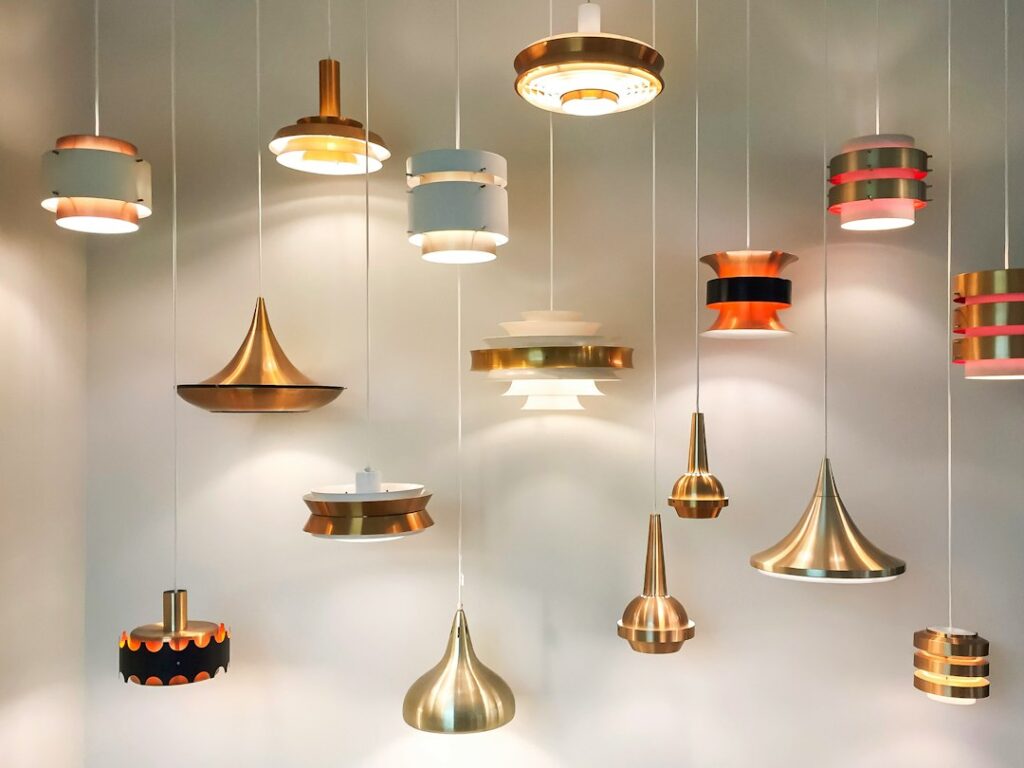

A manufacturer usually turns a visual idea into something that can be made, wired, finished and maintained. A good brief should cover the room, ceiling height, dimensions, preferred materials, bulb or LED expectations and the atmosphere required. For example, a long, narrow hallway may need a slim series of wall lights rather than a single striking pendant. In a period home, the maker might also consider sightlines, existing plasterwork and the route for cables. This practical involvement is different from simply selecting a colour or shade from a standard catalogue.
Several technical terms are worth understanding before approving a design. Lumens describe the amount of visible light, so they give a better indication of brightness than wattage alone. Colour temperature, measured in kelvins, indicates whether light appears warm and golden or cooler and whiter. Colour rendering index, commonly shortened to CRI, describes how naturally a light source shows colours, which matters above a kitchen island or beside artwork. Beam angle is another useful concept: it describes how widely light spreads. A narrow beam can highlight an object, while a wider beam gives more even general illumination.
Materials affect both appearance and performance, not just the price. Glass may be clear, frosted, textured or coloured, with each treatment changing the way light travels through a room. Metal can be polished, brushed, painted or given a patinated finish, but the chosen surface may need suitable cleaning and protection. Imagine a glass pendant over a staircase: its proportions, weight and suspension points need careful coordination so it looks light without creating an awkward visual obstruction. Discussing samples or finish swatches early helps prevent a beautiful drawing from becoming a disappointing physical result. bespoke lighting manufacturers can be assessed partly by how clearly they handle these details.
Custom work does not remove the need for electrical planning. The driver is the component that regulates power for many LED fittings, and it may need to be accessible for replacement rather than sealed inside an unreachable ceiling void. Dimming compatibility should be agreed before manufacture, since not every LED system works with every dimmer. IP ratings indicate protection against moisture and solid objects, making them relevant in bathrooms, kitchens and sheltered outdoor locations. A design may be visually suitable yet still need changes to its enclosure, cable route or mounting method before installation.
Timing and cost are easier to judge when the stages are visible. An initial consultation may lead to drawings, material samples and a quotation, followed by approval, fabrication, finishing and delivery. A client renovating a kitchen, for instance, should coordinate the light position with cabinetry and extraction equipment before ceilings are closed. Small revisions after a drawing is approved can affect both labour and materials, especially if glass, metalwork or specialist finishes are involved. Asking what is included, how changes are handled and who installs the fitting gives a more realistic picture than comparing headline prices alone.
Choosing a maker should therefore involve more than judging photographs. Ask whether the design can be adjusted to the required dimensions, how finishes are checked, what information is supplied for the electrician and how replacement parts will be dealt with later. It is also sensible to clarify cleaning access, delivery protection and the expected position of any driver or transformer. A calm, useful conversation should leave you understanding what is custom-made, what is standard, and which decisions remain yours. custom lighting specialists should make those boundaries clear rather than hide them behind technical language.