
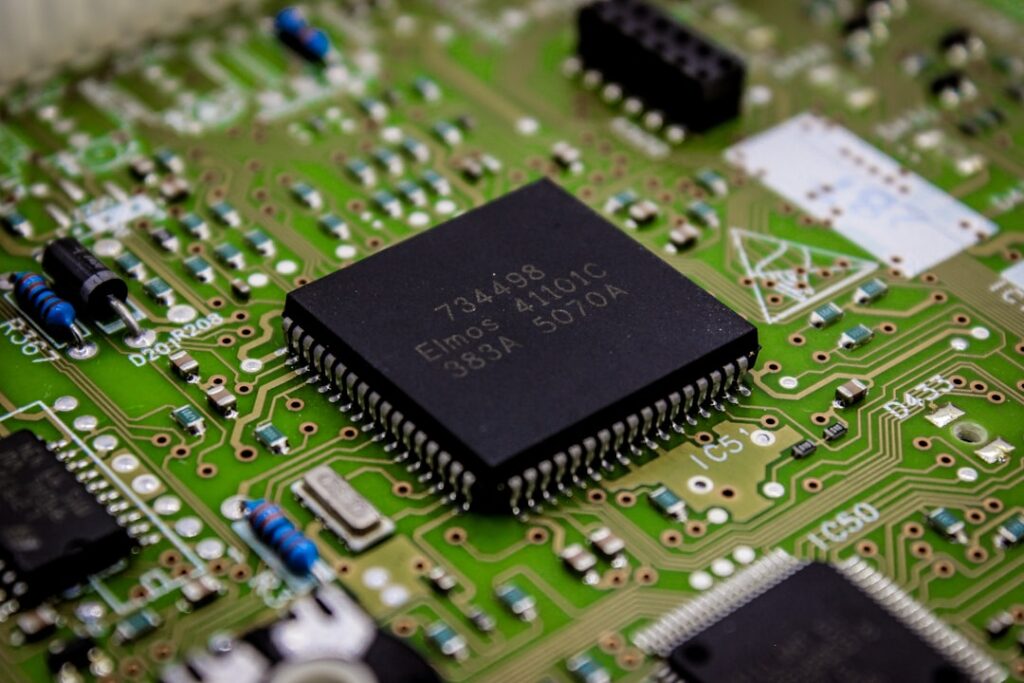
Integrated circuit chips are the foundation of nearly every modern electronic device. From smartphones to industrial control systems, these tiny silicon components house complex arrangements of transistors, resistors, and capacitors, all working together to process information and perform tasks. Their evolution has transformed technology, enabling smaller, faster, and more energy-efficient devices than ever before.
At their core, integrated circuits (ICs) consolidate thousands or even millions of electronic components into a compact chip. This efficiency not only reduces the physical size of electronics but also enhances their reliability and performance. The design process for an IC involves several stages, including circuit design, layout, fabrication, and testing. Each stage requires precision and expertise, as even a minor flaw can render a chip useless.
One of the major advantages of integrated circuits is their versatility. They can be custom-designed for specific applications or manufactured in large volumes for general use. This flexibility has allowed them to become central to innovations in computing, telecommunications, automotive systems, and consumer electronics. Their ability to integrate multiple functions into a single chip has also led to the development of more sophisticated and multifunctional devices.
As manufacturing technologies advance, the scale of integration continues to increase. Modern chips often use nanometer-scale processes, enabling greater density and lower power consumption. This progress is critical in areas like wearable technology and Internet of Things (IoT) devices, where size and efficiency are paramount. The demand for high-performance chips has also spurred developments in chip packaging and heat management solutions.
For those involved in development and production, ensuring the accurate programming of each integrated circuit chip is essential. Programming defines the chip’s behavior and functionality, making it a crucial step in the manufacturing process. Specialized services and equipment are often employed to carry out this task with precision.
In addition to programming, testing and verification are vital to maintain quality and reliability. Chips undergo rigorous evaluations to detect faults and ensure they meet design specifications. This attention to detail helps prevent failures in the field, which is especially important in safety-critical applications like medical devices and automotive systems.
The future of integrated circuits looks promising, with ongoing research into new materials and architectures. Innovations such as 3D chip stacking, neuromorphic computing, and quantum circuits are pushing the boundaries of what these chips can achieve. As technology continues to evolve, the role of the integrated circuit will remain central to progress across countless industries.
To learn more about how these technologies are applied across various sectors, explore solutions offered by leading electronic service providers.